Project Information


The Local Roads Connectivity Project (LCRP) is to finance infrastructure investments in municipal roads and streets including related consultative and preparatory processes for safe and resilient local roads.
The Technical Assistance for Development of Sustainable Urban Mobility Plans for five Municipalities and providing training on developing and implementation of Sustainable Urban Mobility Plans (Ref No: LRCP-9034-MK–REoI-CS-CQS-A.1.1.5) is implemented within the Local Road Connectivity Project (LRCP) No. P170267 financed by loan from the International Bank for Reconstruction and Development – World Bank.
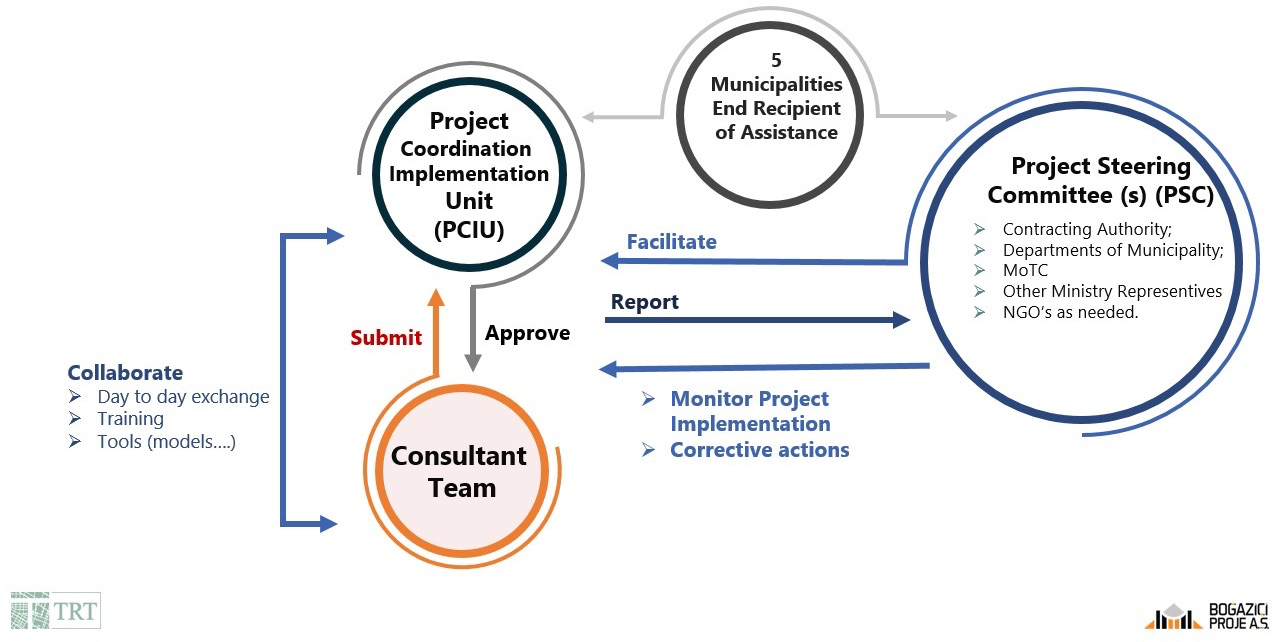
Project Organization Structure
North Macedonia, a landlocked country in the Balkans, is strategically positioned on Pan-European transport corridors VIII and X, offering significant economic potential through access to the EU and its 650 million-strong market. With a population of 1.8 million, the country faces challenges in managing its 9,000 km local road network, which is under the jurisdiction of decentralized municipalities that often lack the capacity and resources for proper maintenance. This has resulted in deteriorating infrastructure, limiting access to essential services and opportunities for many citizens. The adoption of Sustainable Urban Mobility Planning (SUMP) is seen as a pivotal strategy to address these urban transport challenges and improve connectivity and quality of life across the country.
The project supports both urban and rural municipalities, ensuring access to essential services and facilities for citizens, including vulnerable groups such as the Roma community.
The LRCP not only upgrades infrastructure but also lays the groundwork for effective SUMPs in the Macedonian cities in question, aligning with EU guidelines to ensure sustainable, safe, and inclusive urban mobility.
The Plan of Activities
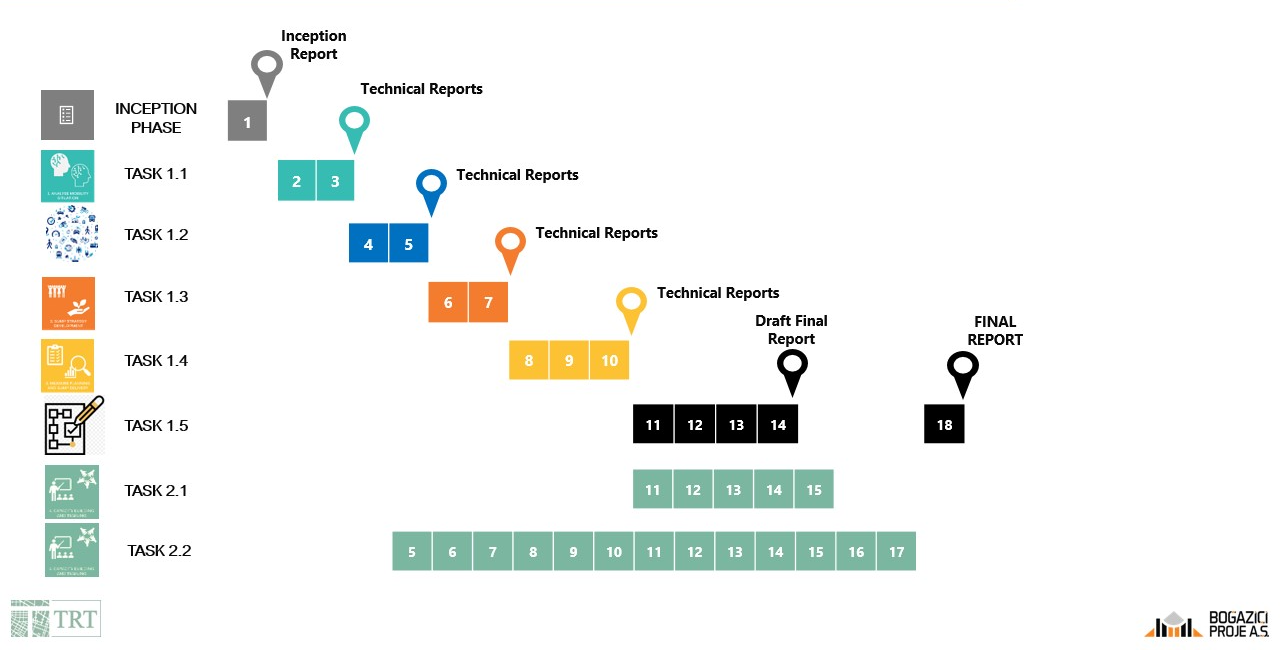
SUMP Process in North Macedonia
Activity-1 Developing of Sustainable Urban Mobility Plans for 5 Municipalities
Task 1.1 – Set Up Working Structure, Determining the Planning Framework and Stakeholder Engagement
Task 1.2 – Analysis of Current State of Mobility
Task 1.3 – Strategy Development
Task 1.4 – Measure Planning and Selection of Preferred Scenario
Task 1.5 – Preperation of the Plan
Activity-2 Training on Developing and Implementation of SUMP and Creating Community of Practice
Task 2.2 – Community of Practice
Project Objectives Explanation
The primary objective of this study is to enhance the sustainability of the urban transport systems in Kavadarci, Kochani, Struga, Strumica, and Prilep. This involves improving the efficiency, cost-effectiveness, and accessibility of the transport network while mitigating its environmental impact. The initiative prioritizes personal safety and security within the transport system, ultimately elevating the overall quality of life for residents. The approach hinges on sustainable urban mobility planning, addressing all transport modes, public and private transport, and considerations for door-to-door mobility.
Developing of urban mobility plans that satisfy the mobility needs of people and business in cities and its surroundings and tackle of transport related problems more efficiently.
Securing of best international practices in developing and implementation of Sustainable Urban Mobility Plans based on sustainable urban mobility planning principles such as planning for sustainable mobility in the “functional city”, cooperation across institutional boundaries, involving citizens and stakeholders, defining a long-term vision and a clear implementation plan, developing of transport modes in an integrated manner, arranging for monitoring and evaluation and assuring quality.
Capacity building to municipalities for sustainable urban mobility planning that provides benefits such as better mobility and accessibility of citizens, better quality of life, better environment and health of citizens, and more efficient use of space.
Objectives of the project

Efficiency

Sustainability

Road safety

Socio-economic benefits

Capacity Building
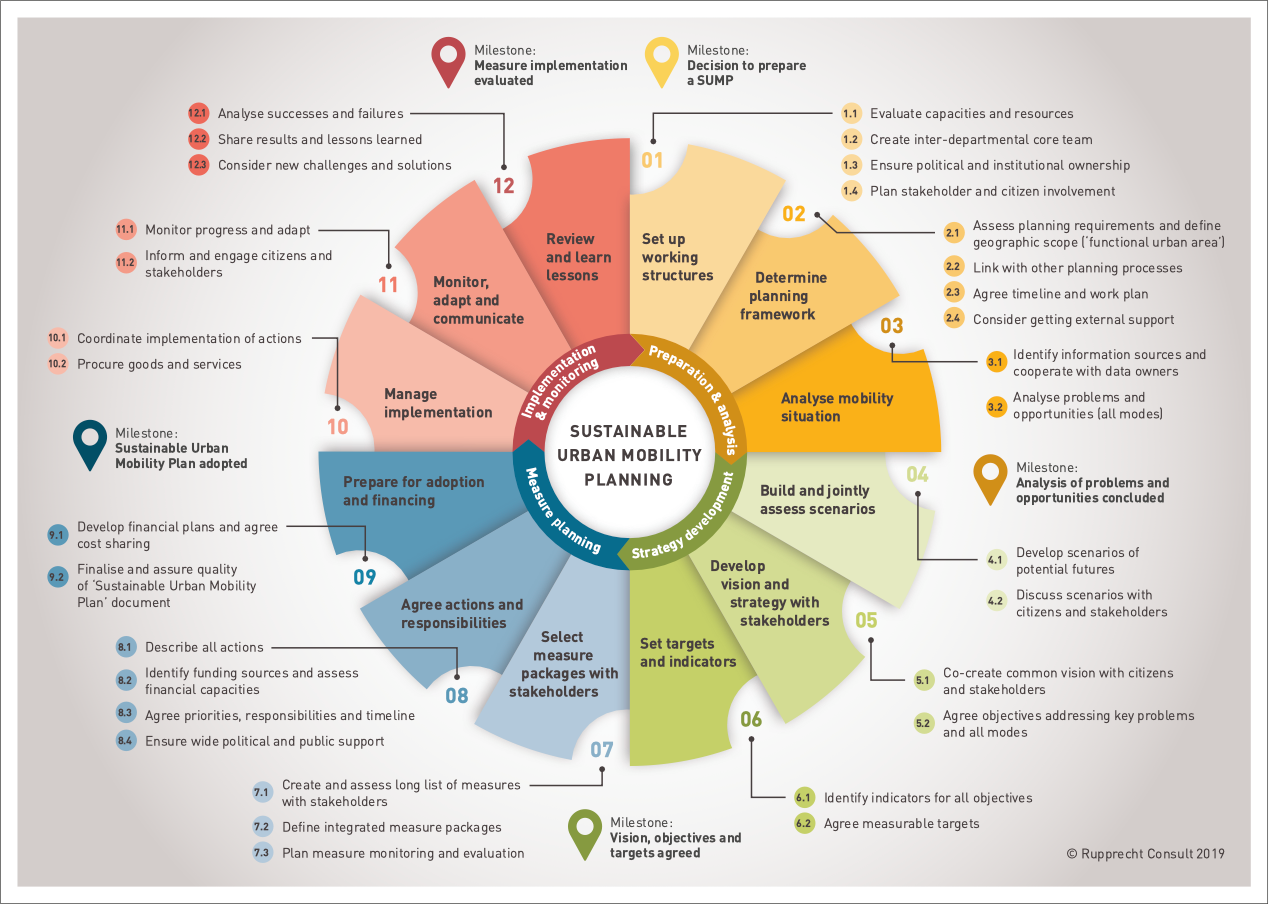
SUMP Cycle (Clock metaphor)